
The online crowd may not be a crowd at all. People are losing trust in the news. And a new gatekeeper now stands between your brand and your audience: the algorithm. At Mediaboard's first international webinar, The Future of PR: From Google to AI Visibility, held on 22 October 2026, we looked at what all this means for the day-to-day work of PR teams.
Our speakers were Marcin Szczupak, CEO of Mediaboard Poland and a media analyst, and Marek Vícha, who leads the Customer Engagement & Loyalty team at IKEA Czech Republic and previously worked as Corporate PR Leader at IKEA's headquarters in Sweden. Here are six takeaways worth remembering.
The best moments of the webinar in 2 minutes:
Download the full webinar recording here.
1. The online crowd can be one person
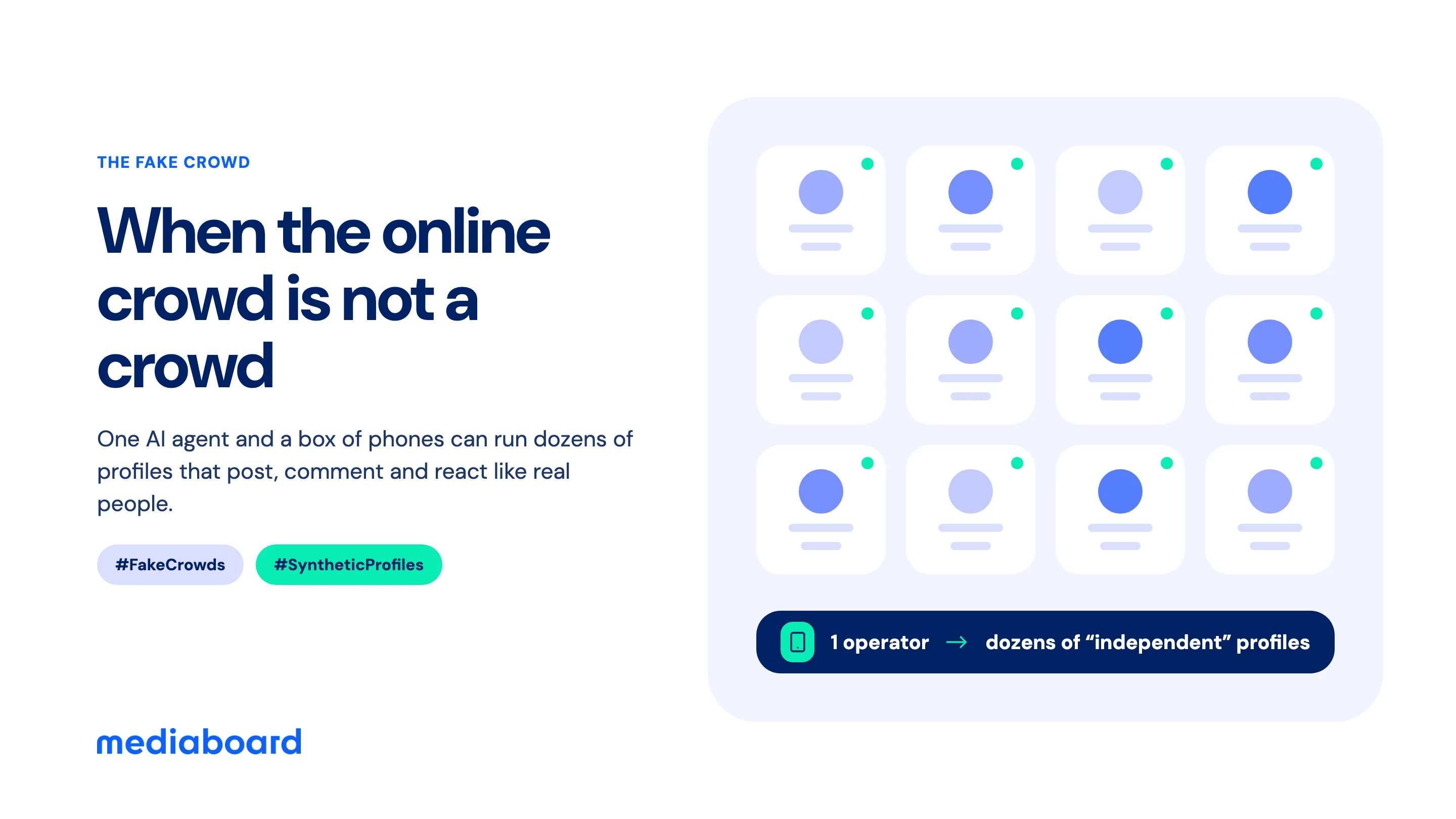
Marcin opened with a video of a so-called phone farm: a box running 20 to 30 phones at once. According to his own research, a device like this sells for roughly €2,500–3,000 on one of the biggest e-commerce sites, and around 20,000 of them were sold there in the past month alone. A second video showed an AI agent controlling these phones and writing posts and comments on its own.
Two such boxes are enough for 50–60 profiles. That's enough to create the appearance of a crisis, the appearance of support, or a fake majority that puts pressure on companies and institutions. Three assumptions we used to take for granted no longer hold:
- one account doesn't mean one person
- lots of comments don't mean lots of interest
- the dominant opinion in a discussion isn't necessarily the majority view
2. A new kind of crisis: fabricated outrage
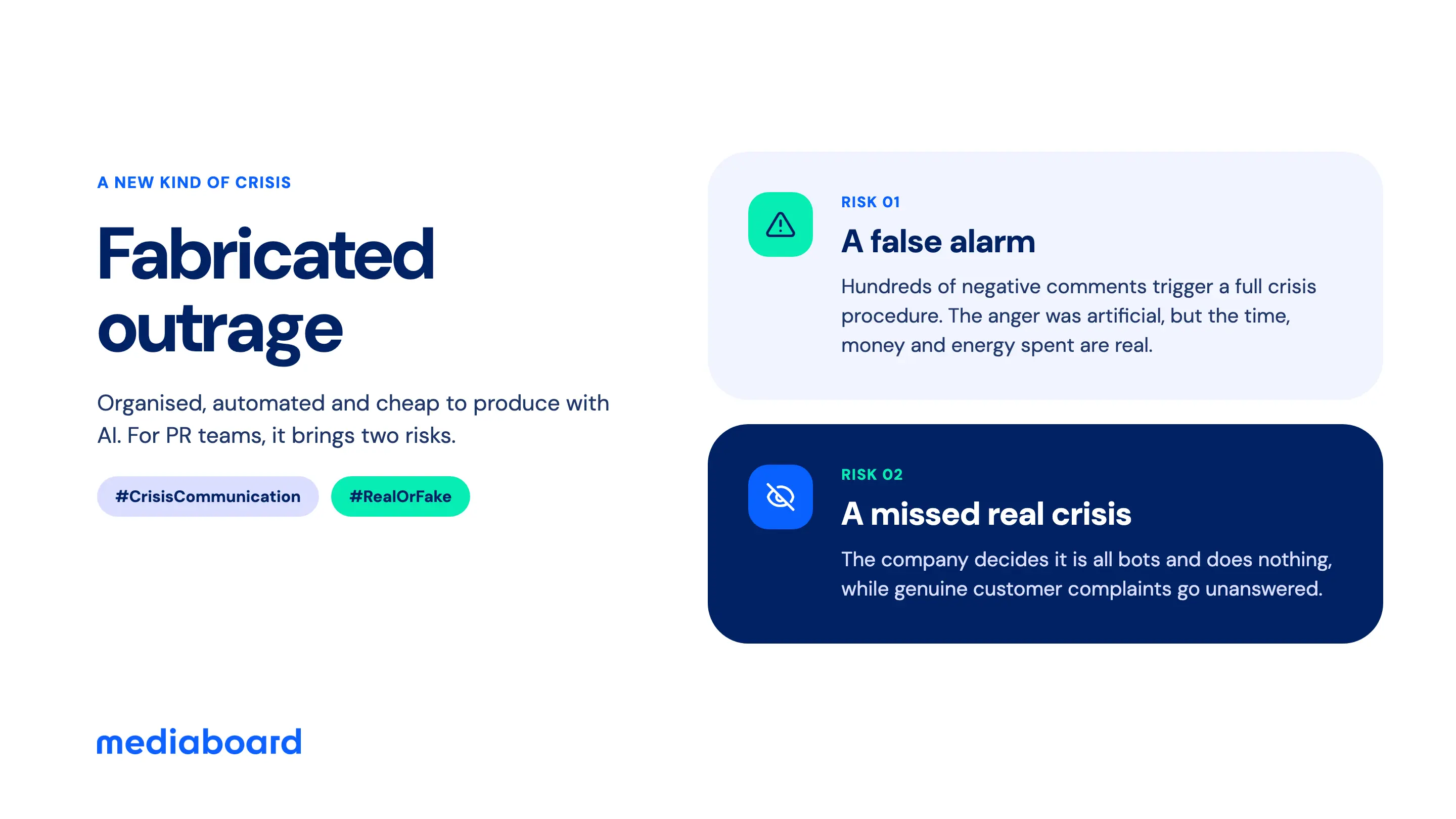
Marcin calls it fabricated outrage. It's organised, automated, and AI makes it cheap and fast to produce. For PR, it brings two risks:
- A false alarm. A company sees hundreds of negative comments and launches its crisis plan. The anger was artificial, but the time, money and energy spent were real.
- A missed real crisis. A company decides it's all bots and does nothing. But among the fake comments there may be genuine complaints that need an answer.
That's why "What is being said about us?" is no longer enough. New questions come with it: Are the authors independent? Is the activity coordinated? Do the mentions spike at the same time and jump between platforms? Do customers confirm the story?
3. Real crisis or just noise?
Marek Vícha has a clear rule of thumb: a real crisis shows up outside social media too. "If there's a real crisis, you'll see it in customer feedback, in store interactions or in business impact. Coordinated outrage typically shows unusual amplification patterns without any corresponding signals from customers," he says.
He shared an example from practice: customer service called him to say dissatisfaction was spreading on social media. When the team looked into it, it turned out to be two comments among thousands. His advice: don't react to volume alone, validate concerns across multiple sources, and treat social media as one part of the bigger picture.
4. Authenticity is worth more than ever
According to Marcin, the bigger problem isn't that people believe false information. It's that they stop believing anything at all. Trust in the news is falling, and content is being produced faster than anyone can consume it.
There's good news in this too: the easier it is to fake content, the more real voices are worth. Marcin calls it the authenticity premium. Strong experts with a track record in the company, official channels and consistent messages are the best defence against disinformation.
5. The algorithm is the new gatekeeper
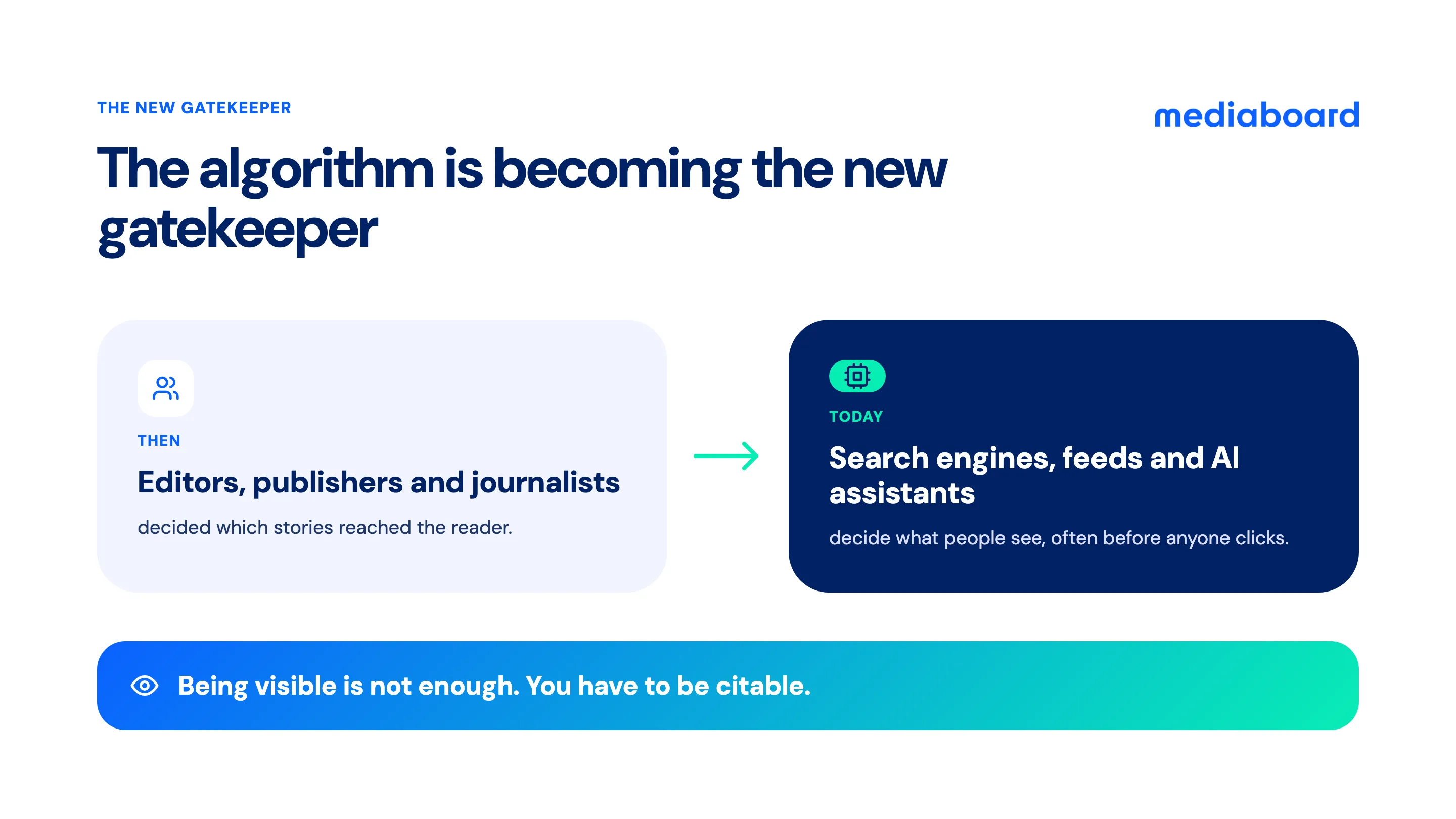
It used to be the editor who decided what reached the reader. Today it's more and more often the algorithm. Instead of clicking through to an article, people read a quick AI summary, and publishers report a sharp drop in traffic. "Your visibility can disappear before anyone clicks," as Marcin put it.
So PR no longer communicates only with people, but also with AI assistants that build answers and recommendations from published content. The media coverage PR teams have fought for over the years is becoming one of the sources AI assistants cite. That's why Marcin believes 2026 and 2027 belong to PR: building media relationships is exactly what PR does best.
Marek pointed out that in most companies, nobody really "owns" AI visibility yet: SEO handles technical discoverability, PR handles earned media visibility. His advice is to start simple: track for three months which sources AI assistants use when they talk about your brand, and plan your media relations around them. Watch out for paywalls, which AI often can't get behind. To see how your brand shows up in AI answers, try AI Visibility in Mediaboard.
6. What to measure when AVE isn't enough
IKEA Czech Republic doesn't use AVE at all. "It's a money metric, and boards and managers love money metrics. But it has a lot of limitations. It's strongly influenced by inflation and currency differences," Marek explains.
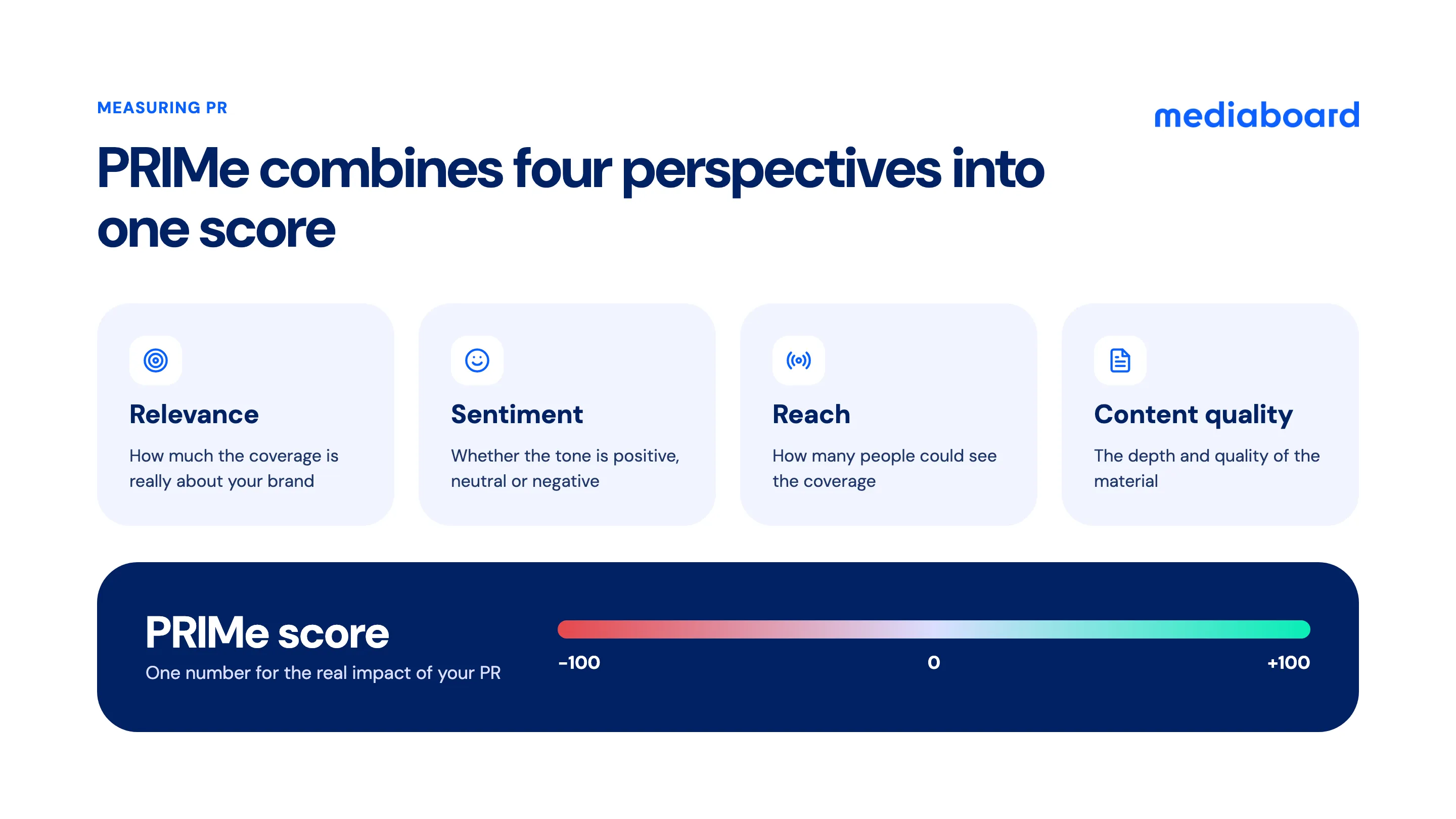
Instead, a few years ago IKEA started measuring the quality of its media coverage together with Mediaboard. The trigger was a price cut: the media kept comparing IKEA's prices in the Czech Republic and Poland, and the company needed to reposition the brand as affordable. Classic monitoring, though, showed just "one mention", even when it was an hour-long interview. That's how an index was born that scores content, context, relevance and reach. Today you'll find this approach in Mediaboard as PRIMe, a metric that combines relevance, sentiment, reach and content quality into a single score from −100 to +100.
If a PR team were to start with three metrics, Marek recommends:
- Share of voice against selected competitors
- A media quality index, such as PRIMe, to show what and how you communicate
- Message pull-through, to see whether your key messages (like sustainability or affordability) actually make it into the media
And on top of that, one metric for visibility in AI answers.
Key takeaways
- Don't treat comment volume as proof of a crisis, check it against other signals
- Invest in authentic voices and official channels
- Track which sources AI assistants use and build relationships with them
- Measure quality and messages, not just the number of mentions
Want to be ready before a crisis hits? Read our guide on how to protect your brand reputation.
Want to hear the full discussion, including audience questions? Download the webinar recording.